
Exploring the Human Element in AI Technologies: Spotlight on FSU’s Thomas Juzek, PhD
Dr. Thomas (Tom) Juzek, PhD, an assistant professor of Computational Linguistics at FSU, is fascinated by the shifting relationship between artificial intelligence (AI) technologies and human language.
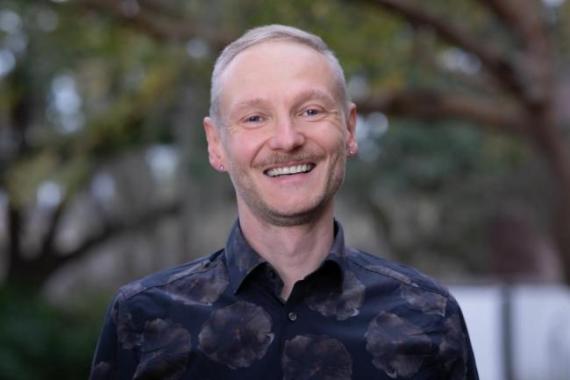
Dr. Thomas (Tom) Juzek, PhD
Tom’s interest in AI began in 2016 when he joined a language-technology company that developed voice assistants. “It was striking how data-driven, machine-learning methods outperformed rule-based systems,” Tom shares. This work experience deepened his curiosity about AI technologies and the mechanisms behind them.
At FSU, Tom creates rigorous, data-driven methods that link linguistics and computer science. His current research focuses on the relationship between large language models such as ChatGPT and human language. He examines “how models behave linguistically, how human language adapts, and how both influence each other” and strives to understand “how human data shape model behavior, more often than people realize. There is still much to learn about how training data and preference-learning stages drive stylistic shifts and lexical overuse.”
For researchers like Tom, AI presents a world of possibilities. “AI assistance lets us build things that were once far beyond reach,” he says. “With today's tools, I can develop a production-grade research repository in months rather than years. That acceleration opens genuine opportunities for programming, research, and education—provided we keep the human oversight and critical reflection that make progress sustainable.”
Fast-moving developments such as the research repository represent progress and provide ample opportunities in computational linguistics, while also signaling change in the field. Whereas linguistic data once implied human authorship, that truth can no longer be assumed, which has led to disruptions in the field. The challenge for computational linguists now becomes distinguishing between human and model authorship. In doing so, they can continue to gain insight about the human language system and human cognition because, as Tom points out, “the human component still matters.”
In his work with students, Tom focuses on preserving and strengthening the human link to, and understanding of, AI. He wants to “teach AI literacy whilst avoiding AI over-dependence. Students want to understand both the power and the limits of these tools. Employers want an AI-ready workforce; academia needs critical thinkers.”
When asked about the reluctance of some to use AI tools and technology, Tom emphasizes the importance of maintaining the human connection. “Tools should serve people, not the other way around. I am always excited to give new technologies a low-stakes shot and then decide whether it is useful. Where the stakes are high, we certainly want to keep a human in the loop.”
In addition to his research, Tom helps coordinate a scientific computing-AI seminar that gathers computer scientists, data scientists, linguists, and ethicists for a weekly exchange of ideas.
Tools should serve people, not the other way around. I am always excited to give new technologies a low-stakes shot and then decide whether it is useful. Where the stakes are high, we certainly want to keep a human in the loop.