
Analyzing Student Perceptions of AI: Spotlight on FSU’s Billy Holden Allen

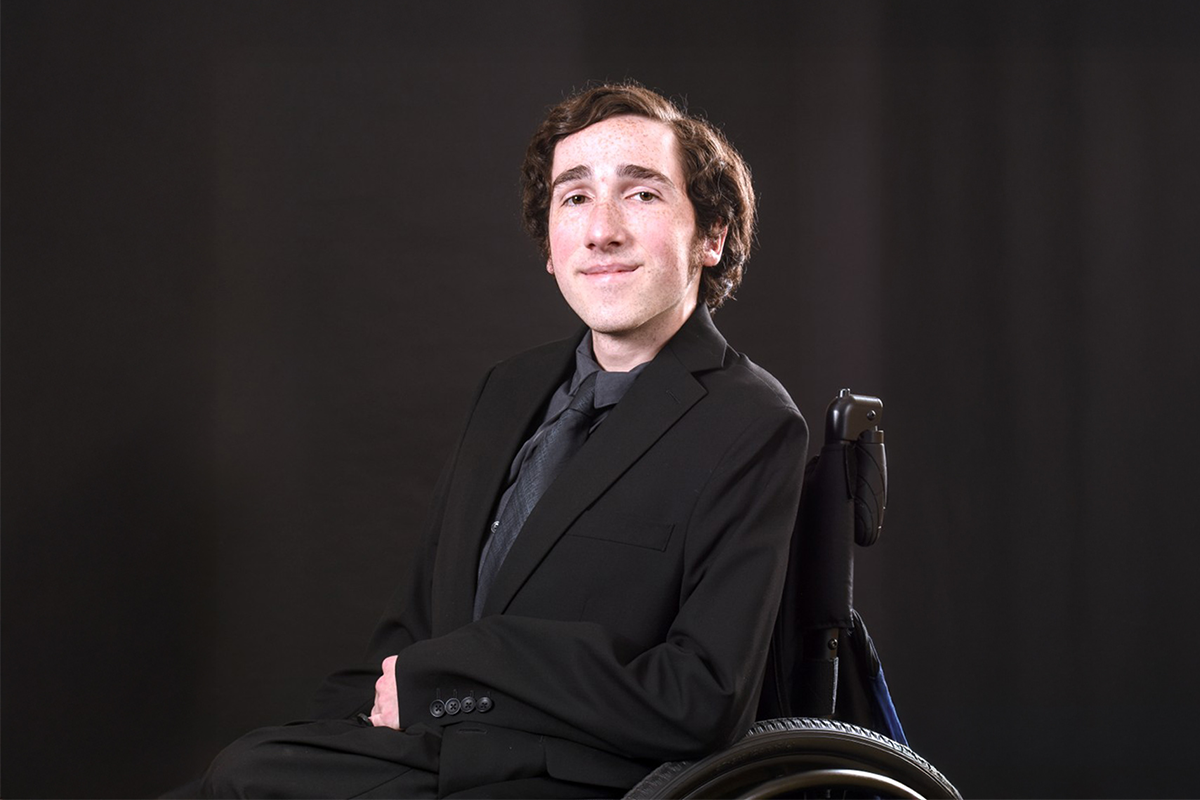
A doctoral student in FSU’s School of Communication Sciences and Disorders, Billy Holden Allen explores student perceptions of artificial intelligence (AI). He hopes to use his research to develop a framework for integrating AI with courses in a way that serves new professionals and clients in the field of speech pathology.
“I want to be surrounded by AI users who want to use AI ethically and show that, when guided by ethics and support frameworks, AI has the capacity to advance humanity forward.”
When Holden arrived at FSU, his primary advisor Dr. Carla Wood recommended a variety of seminars, including “AI in the Classroom: Transforming Teaching, Learning, and Assessment,” led by Gordon Erlebacher, a professor in the Department of Scientific Computing. These sessions were foundational for both exposing Holden to a range of uses for AI and developing new ideas for incorporating it into his field of speech pathology. Through conversations with his peers, he discovered that little data has been gathered on how speech therapy students and faculty perceive AI, let alone what a standard framework for integrating AI into the field’s programs might look like. Holden aims to fill that research gap and spur discussions about the role of AI in FSU’s speech pathology programs.
Surveying students in the Communication Sciences and Disorders program, Holden discovered that, despite some concerns around AI, 89 percent of respondents were interested in learning more about the technology. Many had already used AI for academic tasks such as proofreading or tutoring. In January 2025, 43 percent of syllabi mentioned AI and 23 percent allowed its use for assignments. By November 2025, those numbers had risen to 57 percent and 31 percent, respectively. “Altogether, students appeared cautiously optimistic about AI but also indicated a strong desire for greater clarity and guidance at the program [and/or] course level regarding AI usage,” Holden said.
AI’s ability to streamline work and offer innovative approaches to old problems was an exciting aspect of Holden’s research process. He found AI chatbots like Copilot, Gemini, and Claude useful for learning to run code with statistical calculations and for troubleshooting coding syntax. This allowed him to spend more time analyzing research results than on making code operational.
Holden is also optimistic about the potential for AI as a training tool in the classroom. “As a disabled field professional who uses a manual wheelchair, my two main research interests are researching how we better prepare future field professionals for working with disabled individuals and how we can improve the success of our clients … especially those with language or literacy disabilities,” he said. Past training programs used videos with actors or computer-generated images to educate students about daily work and interacting with disabled clients. Holden envisions AI-generated videos that could be used to provide more accurate and realistic depictions of field experiences during training.
In the meantime, finding a “just right” spot for AI in the Communication Sciences and Disorders program has been a work in progress. Holden suggests there is no one-size-fits-all approach and AI usage guidelines may even vary from class to class. Despite the rapid development of AI technology, Holden believes open conversations and a willingness to learn will lead to developing greater AI usage frameworks.
“If we want to see responsible AI usage and have it be a positive benefit to society, we need to be the people modeling proper usage and driving that positive change,” he said.
Holden is interested in using his initial research findings on AI perceptions to guide future inquiry in his field. He hopes to work on future projects exploring how speech pathology can promote AI literacy initiatives to ensure students and new professionals are using AI ethically and effectively.